Two sources, one batch
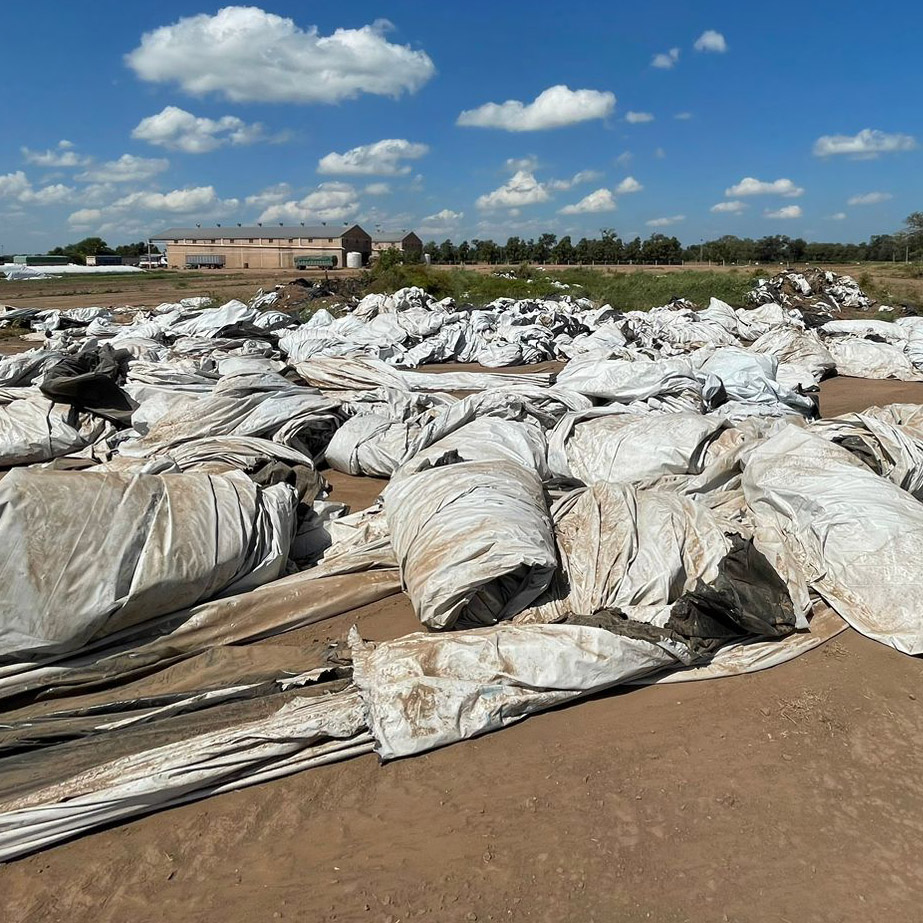
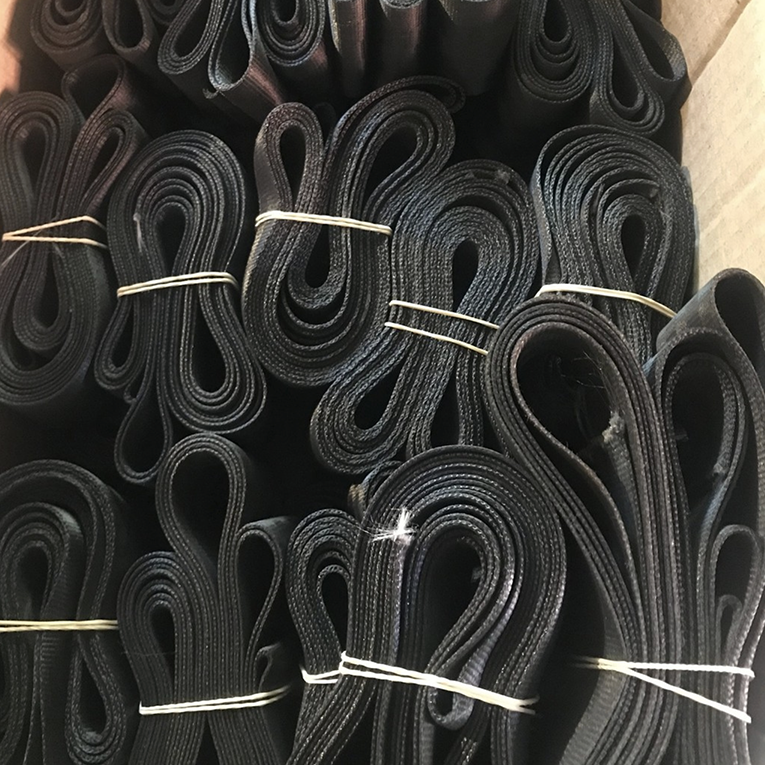
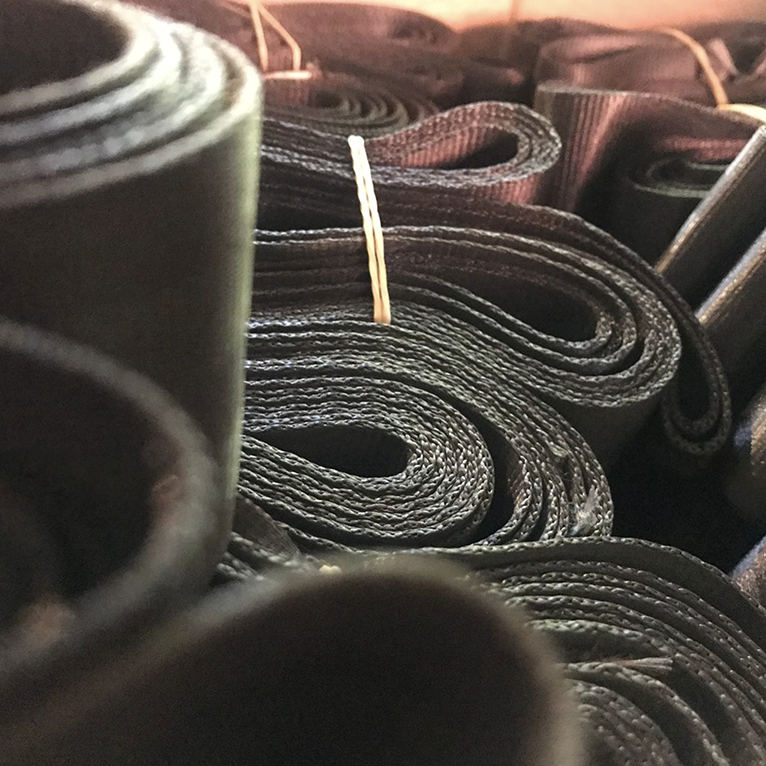
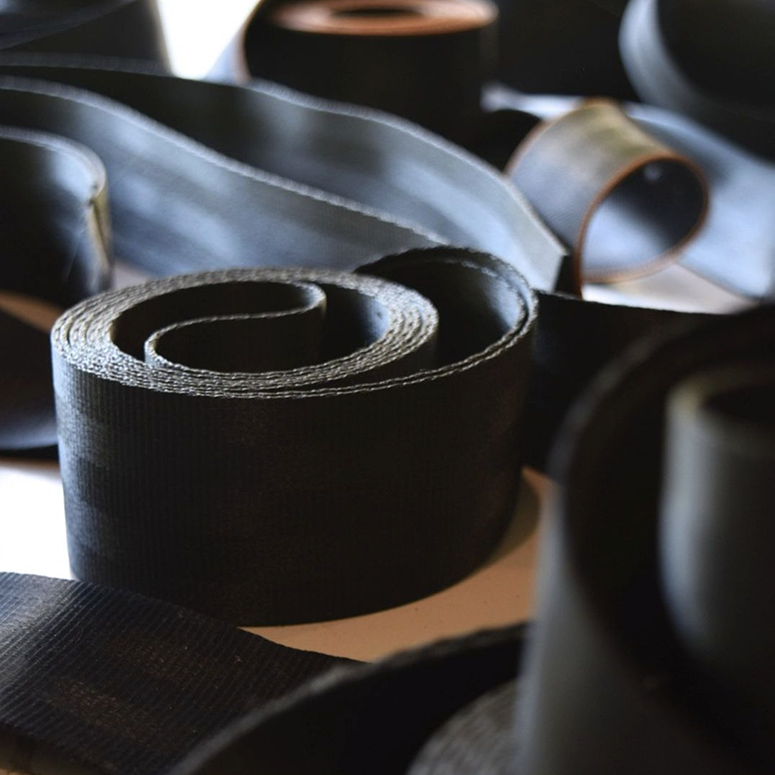
Used silobags were collected from the field and seat belt from the automotive industry. Both were measured before anything was cut: 12.1 m² of sheeting and 67 linear metres of seat belt.

Case study · Automotive · Argentina
Silobags that protected a harvest and seat belt made to hold people safely, from two different industries. Designed around what each does best, they returned together as sling bags that carry the story of both.
01 · Challenge
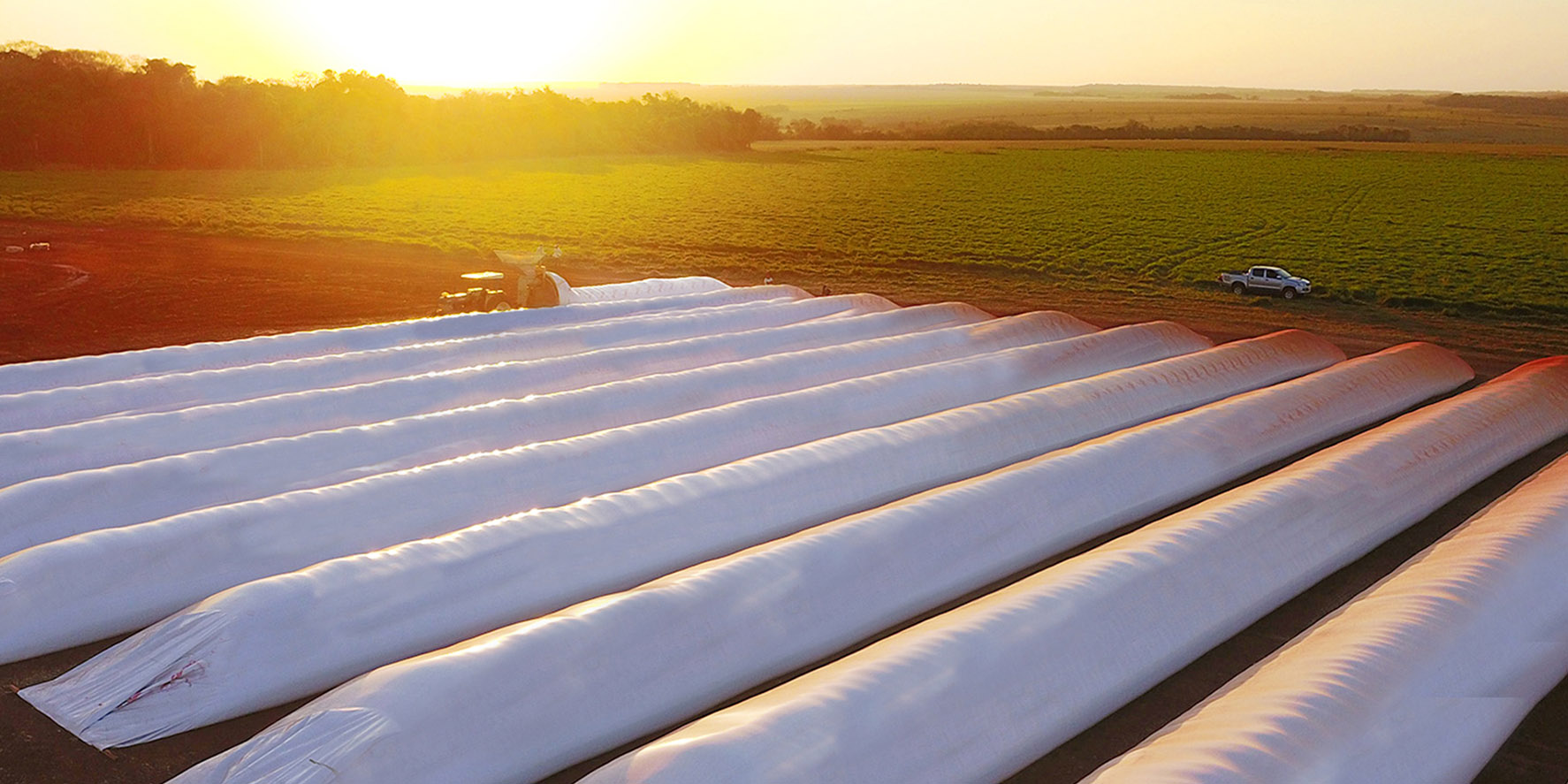
Silobags store grain on Argentine farms for a single season. Afterwards they are plastic sheeting: bulky, dirty, and piled at the edge of the field because there is nowhere sensible for them to go. Seat belt leaves the automotive industry with all of its strength intact and none of its use.
Neither stream is a recycling problem on its own. The difficulty is that both are strong, technical materials that end up treated as rubbish because no one designed anything for them to become.
02 · Strategy
Nissan invested in transforming the material rather than paying for its disposal, putting the budget into craftsmanship, durability and a product with genuine material value.
Used silobags were collected from the field and seat belt from the automotive industry. Both were measured before anything was cut: 12.1 m² of sheeting and 67 linear metres of seat belt.
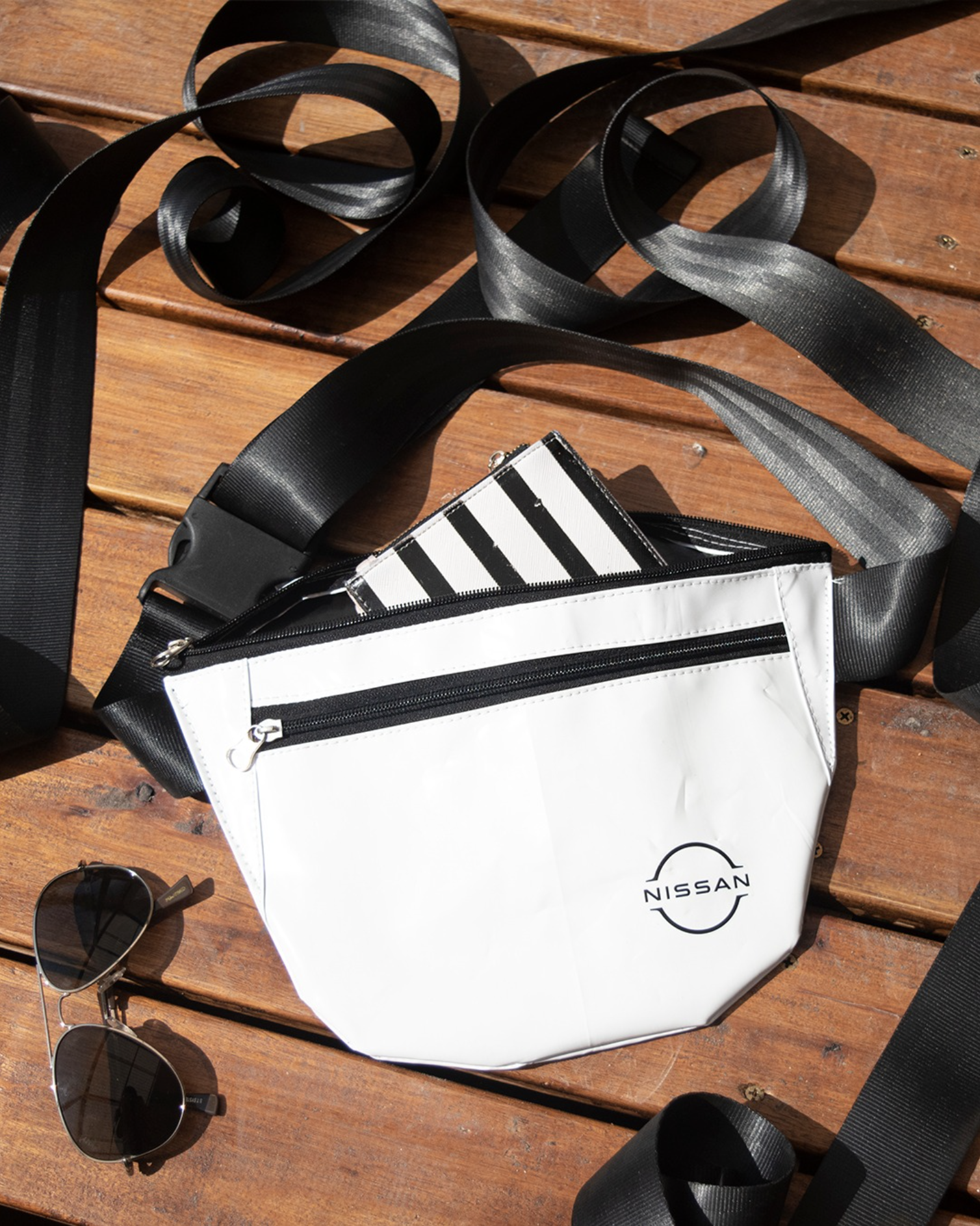
Seat belt is engineered to hold a body in a crash; as a shoulder strap it is overqualified and needs no reinforcement. Silobag sheeting is waterproof and tear-resistant, which is exactly what a bag body has to be. Neither material was adapted to the product — the product was designed around them.
It is about changing the story of the material and the people behind it: two strong materials from two industries, measured, transformed and carried again.
03 · Process
It is not about hiding the material or recycling it until it becomes unrecognisable. The material is the value. With creativity, innovation and a trained eye, what others see as waste can be recognised for what it still has to offer, then redesigned around a new purpose without losing the story of where it came from.
04 · Evidence · Measured with REZET Hub
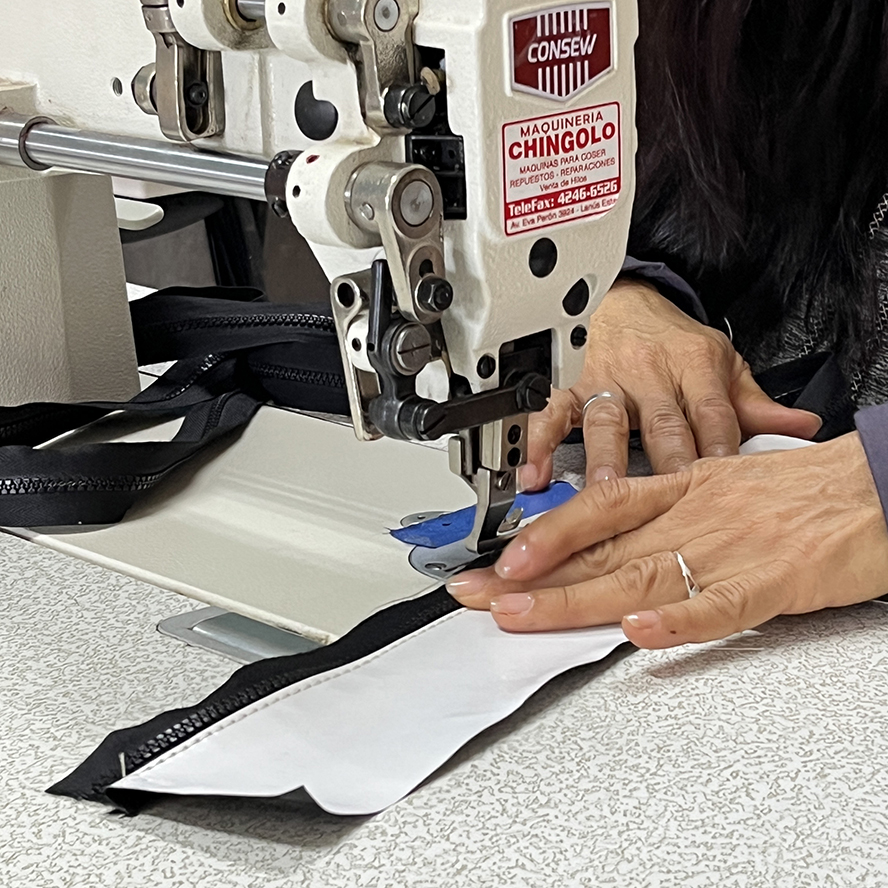
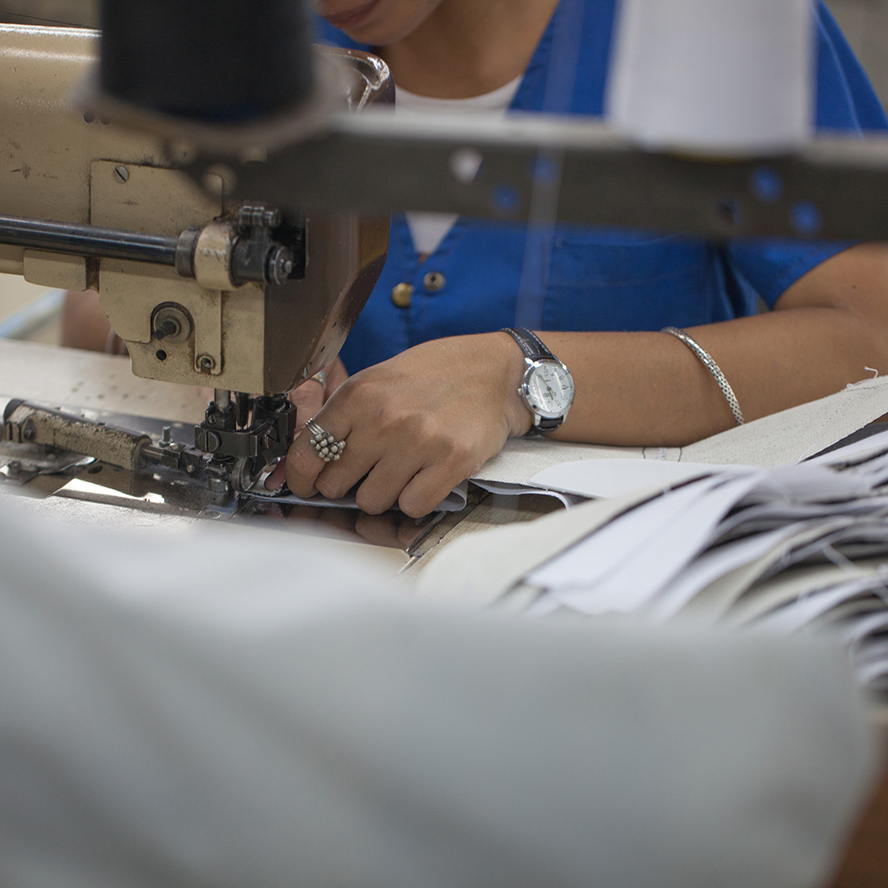
Both streams were measured at intake — 12.1 m² of silobag and 67 linear metres of seat belt — and the finished output was counted: 50 sling bags. Production ran at a social impact workshop, where the cutting and sewing were done.
The figures in this case are checked and the record is managed by REZET Hub.
Each stream quantified at intake, in its own unit.
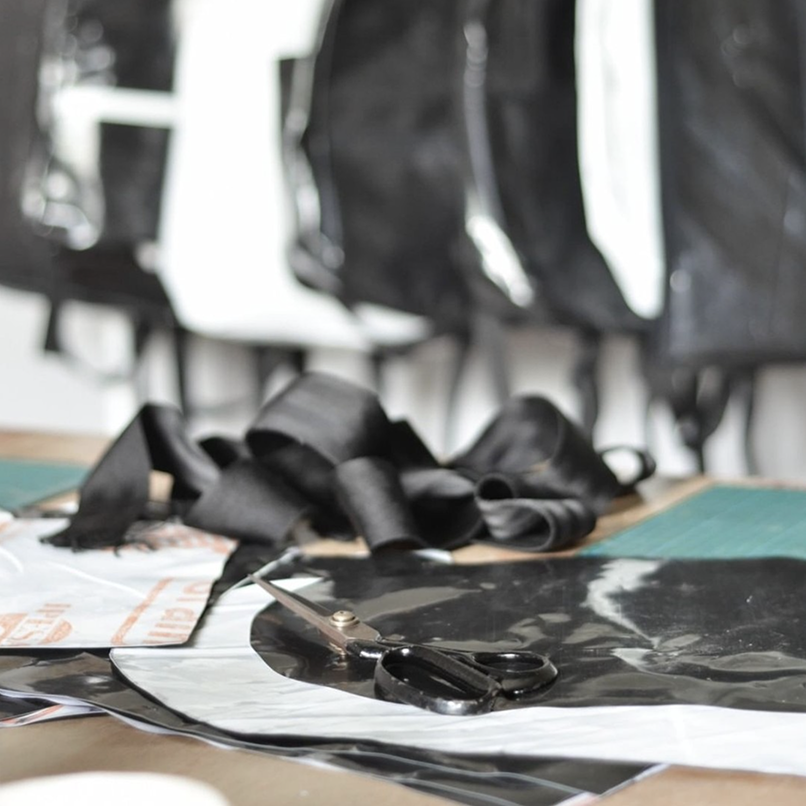
Two materials from two industries kept distinct through preparation and cutting.
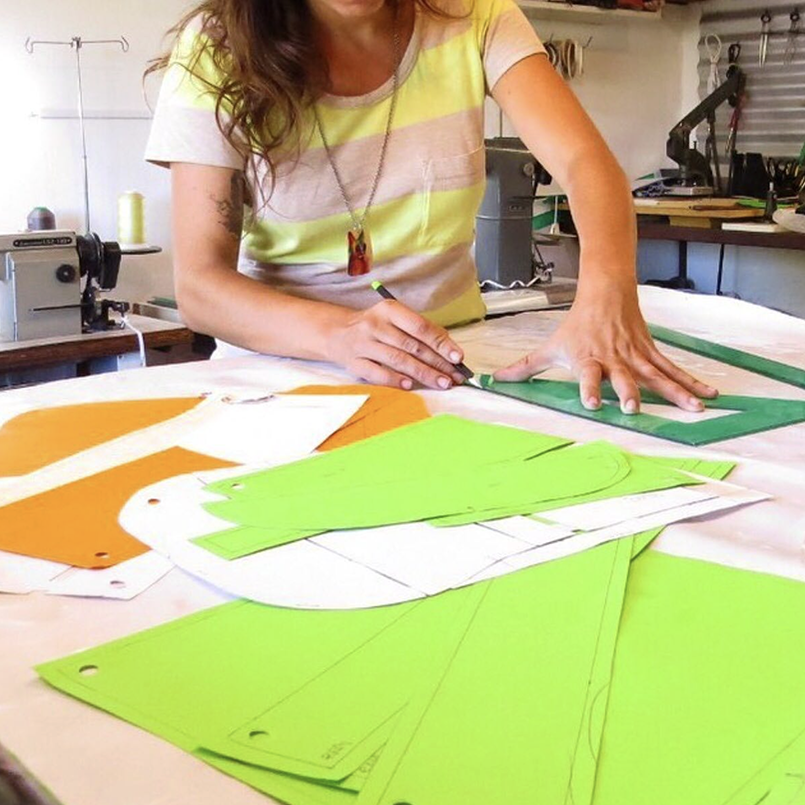
Cutting and sewing at a social impact workshop, with the pattern designed around the material.
12.1 m² of sheeting and 67 m of seat belt kept out of waste, and 50 products delivered.
Behind each of these figures there are families. The people who cut and sew in these workshops are not a line in our metrics: they are heads of family who have come through hard circumstances, and paid, skilled work is what lets them be the ones who provide.
05 · Outcome
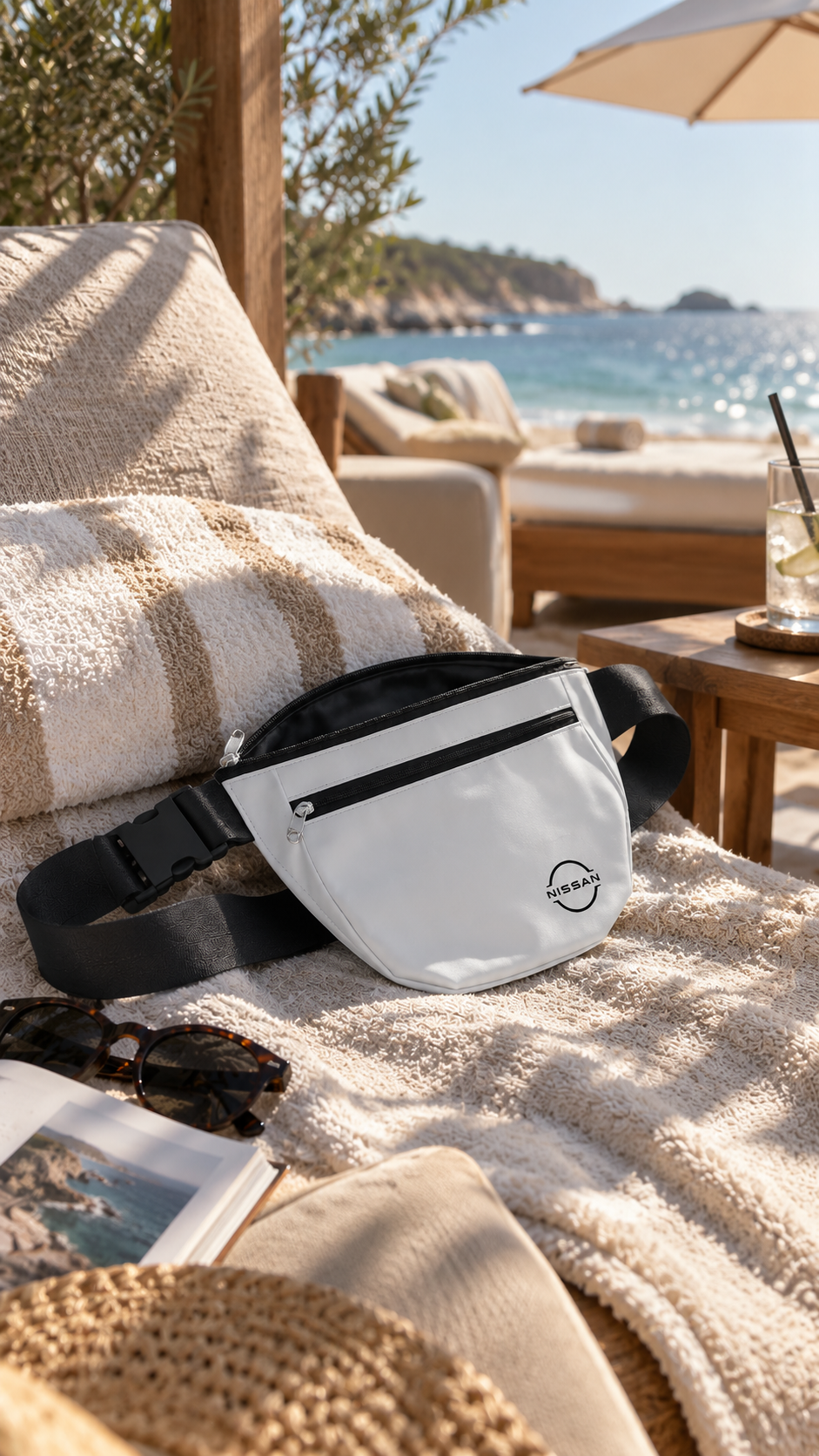
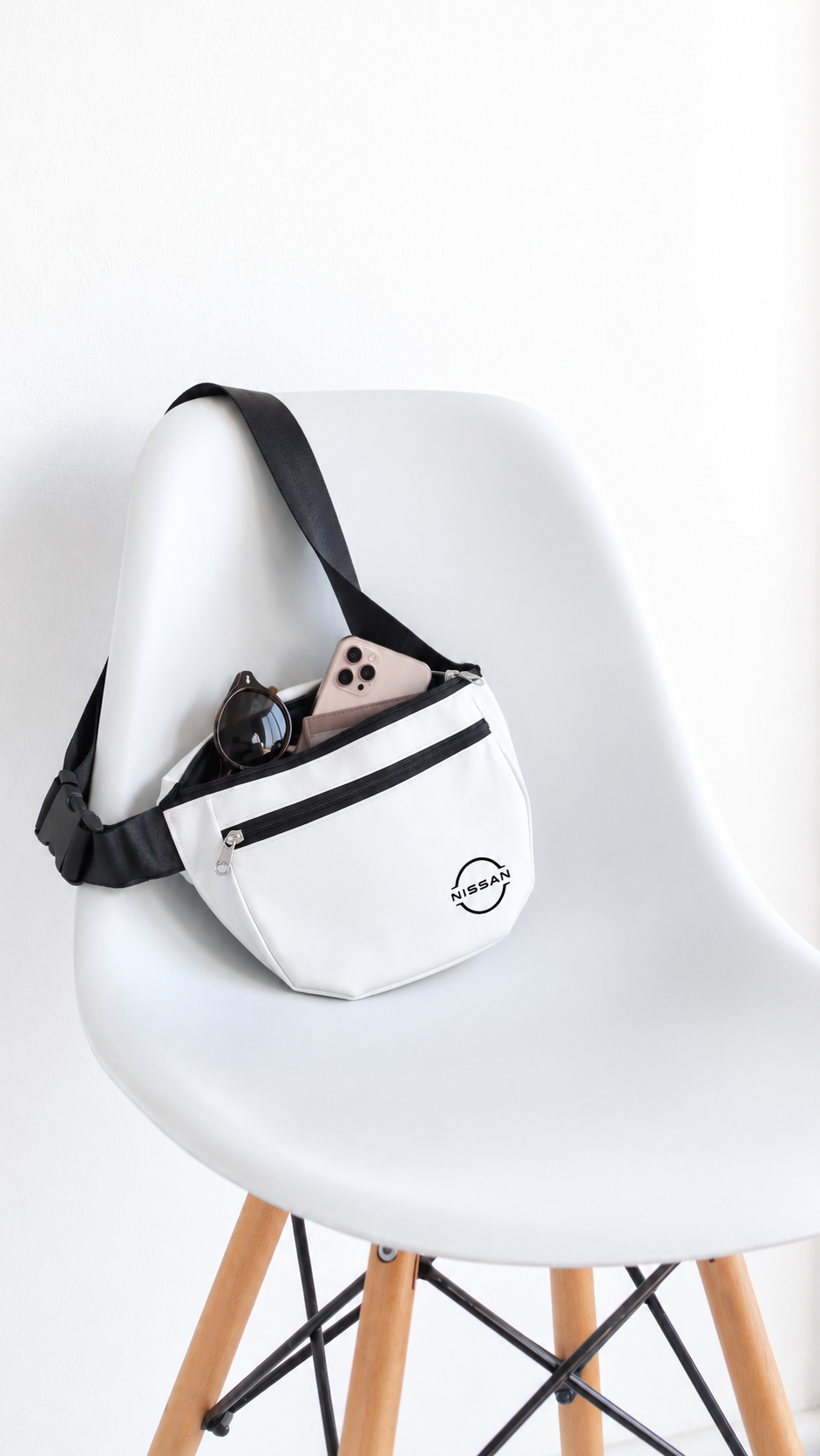
50 sling bags, from 12.1 m² of used silobag and 67 metres of recovered seat belt. Made by 4 people in social impact workshops.
A silobag protects a harvest for one season and is then dumped at the edge of the field. A seat belt is built to hold a person in a crash and leaves the industry with that strength untouched. Put together, they make an object that outlasts the merchandise it replaces — and whoever carries it can say exactly what it used to be.
Why repurpose























Start a circular programme
Tell us what you have and what outcome you need. We will assess the stream before you commit to scale.
Request a waste assessment